Australian nuclear-related news – week to 11th October

Australian news to 10 October
- Submission to the AUKUS Public Inquiry – cancel AUKUS, cease to be part of American militarism – Bevan Lee Ramsden
- Submission to the AUKUS Public Inquiry – against Australia’s interest to be aligned with aggressor USA – Diane Atkinson
- Submission to AUKUS Public Inquiry – AUKUS a sellout of Australia’s security – Michael Gilligan
- Submission to AUKUS Public Inquiry– dubious security value, breaching treaties, radioactive wastes, huge costs – Ian Lowe
- Submission to AUKUS Public Inquiry – dissolve AUKUS, stop being a cog in USA’s military industrial complex – Heidi Glaser
- Submission to AUKUS Public Inquiry – concern about AUKUS Command unit within the Federal Police -Suzanne Pinchen
- Submission to AUKUS Public Inquiry – Radiation protection for workers and members of the public under AUKUS – Dr Tony Webb
- International law isn’t dead- It’s being tested– Australia can prove it matters
- An Australian comment on the The Evacuation of US Bombers from RAF Fairford
- Hegseth calls US-built nuclear submarines the ‘apex predator’ of the seas – But are they right for Australia?
- Putting the boot into a new leader: the monstering of David Shoebridge.
“No economic case:” Global experts say nuclear has role in some countries, but makes no sense in Australia

Giles Parkinson, Oct 12, 2026, https://reneweconomy.com.au/no-economic-case-global-experts-say-nuclear-has-role-in-some-countries-but-makes-no-sense-in-australia/
As Australia’s ultra conservative political parties embark on a headlong race towards nuclear and away from renewables, a major new report by global experts says nuclear has a role in some countries, but makes no sense and will only cause delays and increased costs in Australia.
The new report from the Energy Transitions Commission, a think-tank comprising dozens of energy experts around the world, including those in the nuclear industry, says nuclear capacity could double over the next three decades or so, but it will stay play a relatively minor role in the overall transition away from fossil fuels.
And, they point out in the report – “The Role of Nuclear in the Energy Transition: Complementary but Limited” – it will only make sense in a few countries – a situation the report suggests will not be greatly changed by the hype and interest generated by AI and the push for massive energy-hungry data centres around the world.
For countries like Australia, rich in lower cost renewable resources like wind and solar, the report says nuclear makes no economic sense at all, and trying to build a system around them will simply lead to delays and increased costs.
“In these countries, which include most of Africa, and much of Latin America and Australia, renewables (particularly solar) and batteries will provide the fastest and cheapest option for scaling electricity supply at suitable increments to align with financing availability and system needs,” the report says.
“In these markets, investing in nuclear concentrates scarce capital in a small number of centralised projects, committed roughly a decade before operations, during which the power system could change substantially.
“Developing nuclear would deliver no total system cost benefit, and would require a reliance on foreign nuclear supply chains, which would reduce energy security. Pursuing nuclear programmes in these countries would divert resources from cheaper alternatives, and nuclear shares should remain close to 0%.”
These conclusions, of course, are well understood by the energy industry in Australia, from the Australian Energy Market Operator, the CSIRO, policy makers and regulators, the network operators, the renewables industry and the major utilities who currently burn coal and gas for a living.
But the global fossil fuel and climate denial industry still has its tentacles around the conservative parties in Australia – particularly One Nation and its less popular sidekicks in the Liberals and Nationals – all of whom are determined to slow or even stop the renewable transition in Australia, legalise nuclear and have the government invest countless billions into the tech.
The Energy Transitions Commission highlights the folly of such an approach, and the report would make sobering reading for those politicians, assuming they would be bothered to read it.
Like the World Nuclear Status report released more than a week ago, it punctures a major hole in the nuclear hype, including the assumption that small modular reactors (SMR) will somehow change the game.
- “Small modular reactors remain 1-2 decades away from wide deployment, despite attracting large investment and political attention amid surging AI-driven power demand,” the report notes.
“Early US cost estimates range from ~$US140–$US270 per MWh, well above the large reactor cost range of $US40–$US190 per MWh. Similar reactor designs can cost 4–9 times more to build in the US and Europe than in China and South Korea – financing costs are key factor.”
The report also notes that depending on nuclear power would intensify supply chain risks, rather than easing them. Russia, it notes, controls 40% of global uranium enrichment capacity in 2025, and key nuclear equipment manufacturing is concentrated in just six countries.
“Nuclear supply chain concentration poses the greatest risk, rather than safety and waste management,” the report says.
The report looks at the recent commitment to treble nuclear capacity across the globe by 2050 to around 1,500 gigawatts of capacity. This it says, would require around 500 GW of nuclear extensions (although that itself might be too optimistic), and it struggles to see how 1,000 GW of new capacity could be built.
It says that would require a six-fold increase in contraction compared to recent years. And even if it was delivered, it wouldn’t reduce the need for new wind and solar, which would still have to be built at a rate of 1,500 GW each year, rather than over the next 25 years.
“While this contribution to the energy transition is useful in targeted countries, even this scale of nuclear buildout would be dwarfed by the required scale of investment in renewables to transition to low-carbon energy systems,” the report says.
“An investment of $200 billion per year in new nuclear build is likely to be less than 10% of the $2,200 billion per year needed in renewables, grids and storage.”
The report is at pains to note that nuclear technology may make sense in some countries, those with limited renewable resources and also those with billions already invested in the nuclear industry, including those with nuclear weapons.
More importantly, nuclear’s system value is highest where land is scarce and solar and windresources are weakest
Submission to the AUKUS Public Inquiry – cancel AUKUS, cease to be part of American militarism – Bevan Lee Ramsden
ED. This is a long and clearly argued submission. For reasons of space and time, I am here posting only extracts from it. It can be found in full at https://aukuspublicinquiry.com/
This submission argues that the AUKUS Security Pact should be cancelled and as a
starting point activating the six month cancellation clause in the Naval Propulsion
Agreement.
The AUKUS Security Pact should be cancelled for the following reasons:
- The eight nuclear-powered hunter-killer submarines are neither necessary nor
suitable for Australia’s territorial defence. Twenty air-independent submarines
would be far more effective, be easier to maintain and would cost only fraction
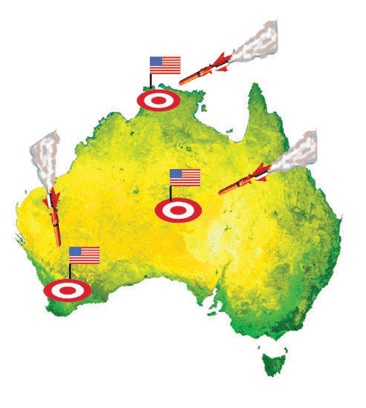
(8%) of the $375 billion. - AUKUS gives the United States porting and maintenance facilities for its nuclear
submarines which may be nuclear-armed and will make Australia a missile target
by enemies of the United States in war time. - AUKUS undermines our sovereign ability to make independent decisions about
involvement in US wars and will inevitably draw Australia into future US wars - AUKUS requires Australia to store toxic nuclear waste from the nuclear
submarines with consequential health risks to present and future populations and
exposes local populations to the health risks of a nuclear radiation leak or
accident. - AUKUS Pillar 2 ties Australian defence manufacturing and research into the arms
manufacturing programs of the United States and for their benefit not Australia’s. - AUKUS compromises Australia in undermining its commitment to the Nuclear
Non-Proliferation Treaty and the Treaty of Rarotonga (South Pacific nuclear-free
zone) as well as providing an impediment to Australia signing the TPNW. - The enormous public expenditure anticipated for this narrowly focussed
acquisition of up to eight nuclear subs will severely compromise national efforts to
address other urgent matters of human security including fuel and food security,
housing and medical security and to address the climate crisis.
I will now provide the arguments for cancellation of the AUKUS Security Pact
starting with Pillar 1.
Pillar 1- The acquisition of nuclear-powered attack submarines.
……………………………………………………………………….. The remaining argument used by nuclear submarine proponents is that they are
needed for defence of Australia’s territorial waters. However, Australia’s territorial
waters are in many places too shallow for the large, noisy, nuclear-powered
submarines to operate in safely and without detection, If submarines are needed
for defence of our territorial waters, smaller vessels are available from Japan and
Sweden which would be far more suitable. These vessels have quieter,
air-independent propulsion, cost far less and are free of radiation hazards. Former SA Senator and submariner Rex Patrick has said that Australia could acquire 20
air-independent subs for $30 billion, which is only 8% of the $375 billion for the 8
nuclear-powered vessels.
The arguments for Australia needing nuclear-powered submarines for our defence
clearly do not withstand scrutiny.
So why are successive governments committed to acquiring them?
There appears to be only one answer.
The US views nuclear subs as a vital part of its strategy to contain China, to track
and destroy Chinese naval vessels in the event of war with China. Our subservient
Australian leadership wants us to participate in such a war as we have done in all
the other post-WW2 wars the US has instigated,………………………..
Conclusion one: The eight nuclear-powered hunter-killer submarines are neither
necessary nor suitable for Australia’s territorial defence. Twenty air-independent
submarines would be more effective for territorial defence, be easier to maintain
and would cost only fraction (8%) of the $375 billion.
Conclusion two: The US has made it clear that it will expect Australia’s
nuclear-powered subs to participate in any US-instigated war and be subject to US
orders. To acquire such submarines in order to join a war with the US against
China would not only be extremely foolish but an economic disaster for Australians
and bring an unnecessary war to our soil.
The cost
Cost has to be another reason for questioning the acquisition of these
nuclear-powered submarines. Five of the eight submarines are of a new type, the
SSN series, to be designed by the UK and built largely at the Osborne shipyards in
South Australia. Given that they are yet to be designed and are to be built at a
facility that has no prior experience in building such vessels, the estimated cost of
$375 billion has to be regarded as a massive under-estimate………………………………………………………………..
Under Aukus and the Force Posture Agreement $8 billion of tax-payers fund will be
spent on the development of porting and maintenance facilities at HMAS Stirling,
Garden Island in WA for US and UK nuclear submarines. This development includes
a “controlled industrial facility” which will store the low -level nuclear waste from
these submarines. Greens Senator David Shoebridge has found out that
intermediate-level nuclear waste could also be dumped at this location.
The AUKUS Agreement has thus opened the door to Australia having to store
submarine nuclear waste and the concern is that the high level nuclear waste from
the nuclear reactors that drive the propulsion system of these submarines will also
have to be stored somewhere in Australia when those reactors have passed their
use-by-date.. Such a facility has not been determined yet and the provision of such
a secure facility which will prevent toxic leaks for centuries has proved a problem
for many countries and therefore presents a potential toxic threat to Australians in
the future. It should be noted that these nuclear propulsion reactors use
weapons-grade enriched uranium.
No costing has been done on the design and provisioning of such a facility in
Australia…………………………………………..
The Australian Naval Nuclear Power Safety Bill, 2023 declares Garden Island in WA
and Osborne in SA to be nuclear zones, areas in which the scenarios determined
by ARPANSA, would apply
The residents living near Garden Island and the Osborne Shipyard have not been
ad-vised of the ARPANSA risk analysis and emergency responses in relation to a
nucle-ar radiation leak or accident and so have had no opportunity to ask questions or raise any opposition based on this concern.
It is becoming clear that whether Australia receives or builds its own nuclear
subma-rines, this porting and maintenance facility at Garden Island and also the
proposed similar porting and maintenance at a facility on the east coast of
Australia, will be-come southern ocean ports for the US navy,its nuclear
submarines and perhaps more of its naval fleet pulling Australia even more
securely into US war plans.
In doing so they make Australia a missile target by enemies of the United States in
times of war.
AUKUS introduces nuclear weapons into Australia………………………………………………
The flawed process of signing onto the AUKUS Security Pact
The decision-making process behind AUKUS reeks of authoritarianism and
contempt for the Australian people and parliament. There was no public or
parliamentary discussion as one would expect prior to making such a significant
and costly national decision.
Scott Morrison was the Prime Minister who in 2021 secretly signed us up for AUKUS
together with an unknown number of faceless security advisors. He then sold the
idea to the leaders of the ALP in a two- hour power point presentation with no
documentation, no business case and no costing detail.
The ALP leadership enthusiastically embraced AUKUS and have never questioned
its legitimacy and never held any public discussion or inquiry into AUKUS and the
nuclear submarine acquisition. It has become bipartisan policy of the ALP and
Liberal Coalition with One Nation applauding in the background.
Only the Greens and some Independents have voiced questions and opposition regarding AUKUS.
AUKUS was entered into by a deeply flawed and anti-democratic process and
should be subjected to an immediate review in the form of a Royal Commission or
independent public inquiry.
AUKUS Pillar 2- Integrating Australian research and manufacturing with the US to
increase supply to the US war machine.
………………………………………………………………………………. Under Pillar 2, Australian defence industry will also be increasingly dominated by
the big three US software corporations (which already dominate and surveil all of
us), us-ing massive data centres and military focussed artificial intelligence (AI)
corporations such as Anduril and Palantir.
In practice, Australian defence developments and research will be acquired by the
US military. The Pillar II focus on sharing technologies between partners means in
prac-tice a mostly one-way sharing that is towards the US and building up its war
industry. So they will suck our brains for their benefit.
Under Pillar 2, Australian industry will become increasingly integrated into the US
mili-tary industrial complex – serving the needs of US government and US military rather than Australia.
We do not need Pillar 2. We need a publicly -owned, sovereign defence industry
manufacturing to meet our territorial self-defence needs which is quite a different
role to one designed to meet the needs of the US in its wars of aggression.
Alternatives to AUKUS.………………………….
The United States is a fractured, undemocratic society flouting international law
with impunity. We can have no affinity with this dangerous “ally” as former PM
Malcom Fraser said in his book “dangerous allies”.
The heavy US military footprint on our country will only attract a missile attack by
enemies of the US when they are at war. AUKUS is part of the US military footprint
on Australia…………………………………………………………………….
For a peaceful, independent and more secure future, AUKUS must be cancelled
and the Force Posture Agreement terminated, a consequence of which will be the
regaining of sovereignty and ending the heavy US military footprint on our
continent.
Submission to the AUKUS Public Inquiry – against Australia’s interest to be aligned with aggressor USA – Diane Atkinson
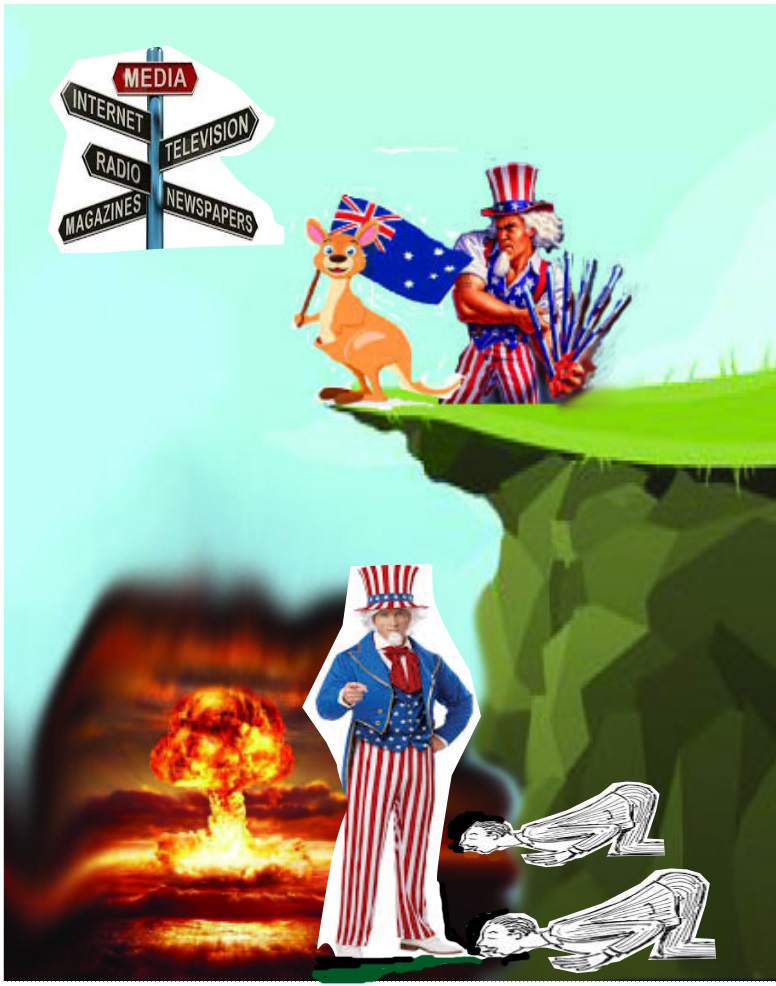
When they attacked Iran, the United States acted as a rogue state. They launched this attack in defiance of rules laid down in the United Nations’ charter, against wars of aggression. This war is already proving to be very much against Australia’s interests
Australia should be seeking to extricate ourselves from the alliance with the US, given the nature and direction of its wars of aggression, rather than tying ourselves more deeply to this alliance through AUKUS.
the danger that wars will be launched from Australian territory by the US, and that Australia will bear the brunt of retaliation against the US.
No 233.
AUKUS represents a very large investment by Australia: $368 billion over 30 years. This is a very
significant portion of our total budget, so we would want to ensure that we get good value, and that
it prepares Australia for the future. However, there is plenty of evidence that this commitment is
taking Australia in the wrong direction. Where we need to be contributing to a more stable and
cooperative world, so that we can solve collective challenges, we will instead be contributing to the
humanitarian and environmental damage that will be wrought by a declining empire, with no
tangible benefit to Australia.
We need to carefully weigh the security threats that are unfolding at this point in history, before we
commit to 30 years of spending. We know that climate change represents a major threat, which is
proving very difficult to confront. Building goodwill and cooperation would contribute to this task,
however the AUKUS alliance does the opposite. Australians have always resisted the nuclear
industry, but this deal forces us to accept the presence of nuclear-powered submarines, and the
waste that will require disposal on our soils. Having nuclear submarines present here is likely to
drive a regional arms race. At a time when resources need to be spent finding solutions to pressing
problems such as climate change, we will instead spend those resources on wasteful weapons of war.
The increased military spending will be perceived as a threat by other powers, and will undermine
the goodwill and global cooperation needed to produce binding agreements to reduce carbon
emissions. Instead, other countries will be obliged to also waste more resources on military
production.
When they attacked Iran, the United States acted as a rogue state. They launched this attack in
defiance of rules laid down in the United Nations’ charter, against wars of aggression. This war is
already proving to be very much against Australia’s interests. It threatens the availability of diesel
fuel and fertilizers, which are so important to Australia’s food security. At this time in history,
Australia should be seeking to extricate ourselves from the alliance with the US, given the nature and
direction of its wars of aggression, rather than tying ourselves more deeply to this alliance through
AUKUS.
Australia’s national security interests are not identical with those of our military ally, the United
States of America. The Global Financial Crisis of 2008 did not impact Australia in the severe way that
it impacted the USA or Europe. One of the reasons that Australia barely registered a recession
during this crisis, is the strength of our trade with China, which accounts for 25% of Australian trade,
based on 2025 figures from DFAT. It could be argued that we are too dependent on trade with China,
but when we think about our national interests, this current reality of China being our strongest
trading partner, needs to be factored in. Australia’s interests are not identical to those of the USA or
Europe, and this is a reflection of both geographical and economic differences. Our proximity with
Asia means that it makes sense for us to trade with Asia, including China. This also makes sense
because we have natural resources that these markets need, while we have lost or failed to develop
our manufacturing base, and our Asian neighbours can supply low-cost manufactured goods. We
made a decision to reduce tariffs and close down some of our industries. These decisions have
consequences for our security.
There is no identifiable threat to Australia’s security that currently emanates from our Asian
neighbours, including China. However, as a result of our free trade policies, we do now face an
economic threat, if our trade is interrupted. This could happen as a result of war, or of trade wars. Neither are in Australia’s interests, given our lack of self-reliance. Australia’s lack of self-reliance in
oil stands in contrast to the position of the United States. The problems in the Strait of Hormuz,
caused by US attacks on Iran, impact Australia more heavily than our military ally.
The United States has different defence priorities to Australia. The US seeks to suppress the rising
powers that have begun to challenge US hegemony. This has become obvious through their attacks
on Iran, which also have a negative impact on both Russia and China, since Iran is at the centre of key
trade corridors, and for that reason both countries have substantial investments in Iran. US leaders
make it very clear that they are hostile to China and Russia, along with a list of nations that are not
willing to accept US domination.
Since the US dollar is the world reserve currency, and this confers huge economic benefits on the US,
challenges such as the BRICS nations trading in their own currencies and using their own payment
systems, are likely to have negative consequences for the position that the US has enjoyed. The
power to shape institutions like the World Bank and trade rules such as the GATT arises from the
overwhelming economic power that the US has held, and this is ultimately backed by their military
power, which has been used to thwart countries that want to reduce the economic and political
dominance of the US over their internal governance. This was manifest in repeated military
interventions in Latin America last century, and in the Middle East more recently.
However, Australia is in a very different position. We are not an empire with hegemony to defend.
We are a smaller power, very reliant on trade, and therefore we have an interest in a stable world
order, and good relations with our Asian neighbours. We have already been adversely affected by
the war on Iran, and this could lead to a direct threat to our national security. One dimension of this
is food security. Diesel and fertilizers are essential inputs to our farming sector, and any resumption
of the war on Iran is likely to cause shortages of both.
The other threat to Australia’s security is the danger that wars will be launched from Australian
territory by the US, and that Australia will bear the brunt of retaliation against the US. We have seen
this happen in the Middle East. Iran retaliated against US military bases in the UAE, Kuwait, Iraq,
Bahrain, Qatar and most recently Jordan, since the US launched their attacks from those bases.
Military agreements such as the Force Posture Agreement and AUKUS prevent Australia from
controlling what the US does on our soil. We may not expect retaliation from Iran because US bases
in Australia in all likelihood provide intelligence for attacks on Iran, but we could well expect
retaliation if the US goes to war with China. Based on US threats, this scenario is currently the most
likely reason that any country might attack Australia.
Australia is currently allied with the very country that is launching wars of aggression. Even the
average person living in the US does not benefit from these wars. They have seen their standard of
living deteriorate over past decades. This deterioration is caused by a shift in the US economy,
whereby it is increasingly dominated by private monopolies, and the public sector increasingly serves
the interests of these rather than the general public interest. This tendency has reduced the
vibrancy of US industry. Even the arms industry, which receives so much public funding, produces
expensive equipment which is proving to be obsolete on the battlefield. Aircraft carriers and
battleships have repeatedly been withdrawn from the area of engagement in the Strait of Hormuz, as
they make easy targets for cheap drones and for missiles. The USA is not demonstrating that it can
use military force to great effect, and yet it relies on such force increasingly, suggesting once again
that it is an empire in decline.
In its attempts to shore up this loss of power, the US is leaning more heavily on its allies like Australia.
We are expected to subsidize the extravagant expenditure on arms that continued world domination
would require, at the expense of our own interests. AUKUS arose out of Australian attempts to
purchase non-nuclear submarines from France. We now find that the Australian prime minister who
undermined that process, and instead committed Australia to purchasing nuclear submarines from
the US and the UK, is now working for the US arms industry. It is obvious that as prime minister, he
was already promoting those interests. Instead of obtaining working submarines in a reasonable
timeframe at a reasonable cost, we now have a program that commits Australia to massive spending,
with no guarantees as to what Australia will get in return. Meanwhile AUKUS spending is driving a
war economy. Education spending by the South Australian government subsidises degrees for the
arms industry, instead of degrees for health care workers and teachers. In this way we are directly
subsidising US owned arms manufacturers, while under-investing in the sectors that ensure our
collective well-being. In the midst of a housing crisis, when many young Australians cannot afford to
buy a home, and many cannot even find let alone afford rent, we neglect to make the necessary
investments in social housing, and instead spend to subsidise the operations of foreign arms
companies. We train our young people to build arms instead of building houses.
The secrecy surrounding AUKUS shows that its proponents have no faith in their ability to convince
Australians that this appalling decision is in our interests. Any reasonable person can see that it is
not.
Submission to AUKUS Public Inquiry – AUKUS a sellout of Australia’s security – Michael Gilligan
232. Michael Gilligan
I was responsible for Defence Department advice on options after retirement of
Oberon class submarines (Head of Force Development and Analysis Division in early 1980s). I am a Board member of Pearls and Irritations (P&I), online policy forum created by John Menadue. Regular contributor to P&I.
Despite its crippling cost, no Minister for Defence has ever explained what the
Virginia class submarine is meant to do. Why has such an obvious ministerial
obligation been evaded? Because it would reveal a sell-out of Australia’s security.
And an extraordinary direct underwriting of US shipbuilding and defence budgets
by Australian taxpayers – of perhaps half a trillion of our dollars. The Virginia class
submarine is not a general-purpose vessel such as our Collins class. It is designed
for supreme acoustic invisibility for a specific purpose – to find, doggedly track
underwater for months and be able to destroy submarines seen as a nuclear threat
to the US mainland. Principally Russian and Chinese SSBN boats. The United States
is stretched beyond its industrial capacity to deal with China’s growing SSBN fleet.
Assisting in that ongoing task is what Australia offered in AUKUS, and so the US
expects Australia’s submarines to do – effectively embedded into US military
command – against China’s burgeoning capacity to annihilate continental America
from under the sea.
LINK – https://johnmenadue.com/post/2026/06/australias-submarine-betrayal/
More broadly, the Minister for Defence has misled Australians habitually on the
value of submarines in defending Australia. His case rests on treating submarines
as essential to Australian sovereignty, while ignoring the powerful array of
capabilities which already protect Australia and its maritime approaches.
Assessments of the submarines’ marginal effectiveness in a whole-of-Defence
context raise serious questions about the value of submarines, even whether they
are warranted at all on cost-effectiveness grounds.
So, the debate on submarines currently consuming Australia’s headlines is
corrupted by two compounding Ministerial lies by omission – the submarines’ job
within AUKUS, and Australia’s range of defence capabilities purposefully created
over decades, which marginalise submarine importance to our security.
Submission to AUKUS Public Inquiry- dubious security value, breaching treaties, radioactive wastes, huge costs – Ian Lowe

227. Ian Lowe
To summarise my relevant experience, my doctoral research at University of York
was funded by the UK Atomic Energy Authority. I studied the basic physics of a
problem affecting the useful life of fuel elements in nuclear reactors. As a member
of the UK Open University’s Energy Research Group, I participated in a
comparative study of the whole-of-life operating costs of nuclear or coal-fired
power stations. I was for twelve years a member of the Radiation Health and
Safety Advisory Council, which advises the nuclear regulator ARPANSA, and I was a
member of the Expert Advisory Committee for the South Australia Nuclear Fuel
Cycle Royal Commission, which reported in 2016.
The critical question is whether owning and operating eight nuclear-powered
submarines would actually enhance our security. I participated in a one-day
seminar run by the Submarine Institute of Australia well before the AUKUS
agreement was negotiated. The submariners were clearly divided about the
question of whether the next generation of submarines should be
nuclear-powered. While they could operate away from base for longer periods and
at greater depth than conventional submarines, their size would prevent them
operating in the comparatively shallow waters around Australia’s northern
coastline, making them less useful for defending our territory. That observation
poses an obvious related question about sovereignty and independence. Would
the AUKUS arrangement move Australia away from being an independent
middle-sized country like Japan or Indonesia, locking us into the US war machine
and increasing the risk of being dragged into great-power conflict with China, our
major trading partner? Some observers fear that AUKUS could actually make
Australia a nuclear target. Given that China is our major trading partner, it seems
bizarre to imagine that we need to protect our ocean-going trade from the Chinese
navy, but that has been proposed as a reason for acquiring nuclear-powered
submarines.
A whole group of questions arise from the specific problems of nuclear-powered
boats. If nuclear technology is transferred from the USA and the UK to Australia to
allow submarines to be built here using weapons-grade uranium, does that
contravene the Nuclear Non-Proliferation Treaty? The proposal has certainly been
seen by some of our South Pacific neighbours as inconsistent with our treaty
obligations. What are the environmental risks of operating nuclear-powered
submarines in Australian waters? Some technologists who are quite enthusiastic
about nuclear power stations are worried about installing reactors in vessels which
an enemy would understandably try to destroy in any serious conflict.
The final issue under this heading is the long-term problem of managing the
radioactive waste when the submarines reach the end of their lives. The AUKUS
agreement makes Australia responsible for waste management. That would be a
huge problem. Our government has made three unsuccessful attempts to
establish a national repository for the comparatively benign low-level radioactive
waste from nuclear medicine and industrial applications. In every case, the
proposals have been successfully opposed by local First Nations groups. Their
memories are critically shaped by their experiences when the Menzies government
allowed the British military to test nuclear weapons on our land. But the problem
of managing the waste from nuclear submarines is orders of magnitude more
difficult than storing low-level waste. The small reactors use highly enriched
uranium, weapons-grade material, which produces a much more intractable set of
waste products than emerges from nuclear power stations. The USA and the UK
have been operating nuclear submarines for more than sixty years, but have still
not worked out how to manage the wastes. The decommissioned boats are just
sitting at docksides while the government scientists ponder the issue.
Assuming we do prove able to solve the problem and develop a system for
managing the waste, it is likely to add another huge sum to the overall costs of the
project. In 2015, a South Australian Royal Commission considered the possibility of
going into business managing the waste from nuclear power stations in Asian
nations that do not have suitably stable geology for long-term secure containment.
I was a member of that inquiry’s expert advisory committee. We sponsored a
serious study of the likely cost of building and operating a secure repository for
high-level radioactive waste from power stations. The consultants came up with an
estimate of $145 billion; adjusting that total to 2026 costs gives a figure of about
$190 billion. So accepting responsibility for managing the wastes will mean a
further eye-watering cost burden on future generations. In fact, that figure is likely
to be a conservative estimate, because the consultants were asked to calculate
the cost of managing waste from nuclear power stations. Not only is the mix of
waste products from a nuclear submarine nastier, it also contains enough
weapons-grade uranium to make at least 20 bombs. So the waste management
facility will require military security to ensure the fissile material is not misused.
Submission to AUKUS Public Inquiry – dissolve AUKUS, stop being a cog in USA’s military industrial complex – Heidi Glaser.
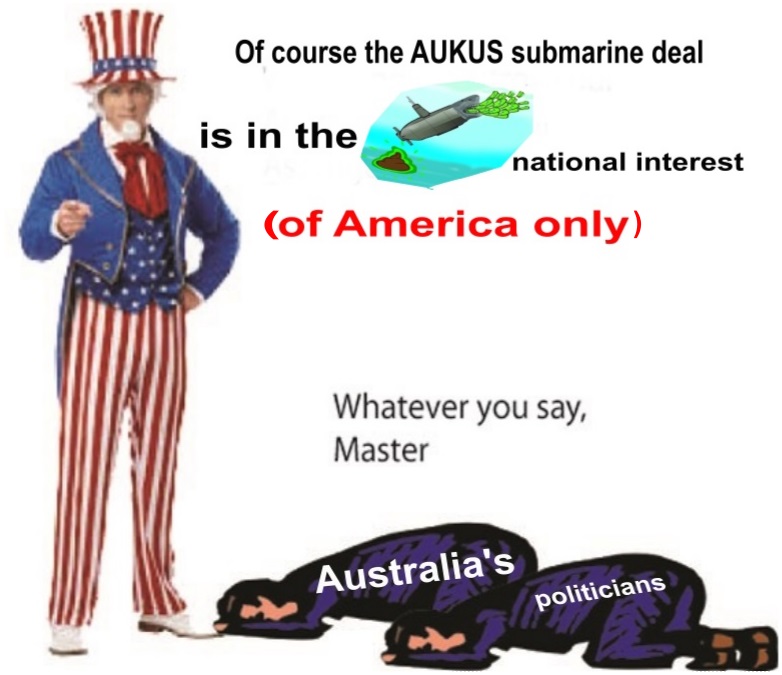
226. Heidi Glaser
AUKUS must be dissolved. It is beyond comprehension, the level of incompetence
and ignorance our government is capable of to think Australian’s would support
and agree to these conditions. It could not be more insulting to our intelligence.
We are a peaceful people. We have no interest in wars. We do not want to be
aligned with the US and participate in their forever wars. We have become a cog in
their military industrial complex. Why are we supporting a country we know are
involved in illegal wars who are committing war crimes with complete impunity?
Why would we sacrifice our country for them? The US are not our ally. We have
become a vasal state against our will. No wonder they mockingly refer to us as a
lap dog.
We are enabling them to continue their slaughtering of innocent civilians
around the world. We want no association with them, their bullying, coercion and
disruption globally needs to end now. We are paying them to become a military
target on their behalf, we are less safe because of AUKUS.
We have no interest in
conflict with China. They have no reason to attack us and have never threatened
our country. We rely on them for our economic success. We should be doing more
to partner with them and create a coalition in the global south to make Australasia
the safest and economically sound region in the world.
We have great relationships with our neighbours and AUKUS will destroy that. That is the
incredible insanity of this agreement. It is ensuring our future failure not
prosperity. If we spent this much time and money on peace in the world, and not
on planning for future wars, humanity would be thriving. Fearmongering from the
US must be stopped, not supported.
We can never allow nuclear dumping on this
land. These submarines shouldn’t even be made. Why are they even allowed to
build anything that produces a radioactive poisonous waste? They have no idea of
the long term damage to the planet and it’s unbelievable to hear they have never
had an established protocol around safe storage of the nuclear waste produced.
That is sickening to me. Stop making things that are killing us and the earth. We
need to protect this land. The first nations people are the oldest continuous
civilisation on the planet, the ancient history of their people and of their land is
sacred and it should be honoured and protected at all costs. We can not let them
down, we owe them to fight for this beautiful land.
We reject AUKUS, we don’t
want wars, we don’t want a world where we even need weapons. This can not be
allowed to proceed. No intelligent Australian supports this. It’s time Australia took
back it’s sovereignty. Imperialist America’s must be stopped and this is our chance
to cut all ties with them.
Submission to AUKUS Public Inquiry – concern about AUKUS Command unit within the Federal Police -Suzanne Pinchen
218 Suzanne Pinchen

the function of this unit will be to protect AUKUS related activities and facilities, including public order responsibilities.
this unit will be supplied with
firearms, and, what are referred to as, “crowd suppression munitions” including rubber bullets, tear gas and capsicum spray.
Question for Inquiry:
I am a grandmother of two identical twin boys aged 3 1⁄2, for whom AUKUS
will have real consequence. I am also retired after working in
Broadmeadows as a Social Worker working with women and their families
for 40 years. I am now a chorister – part of a choir which became the
unofficial choir for the Yes to the Voice to the Parliament Referendum in
Melbourne and a member of both the Australian Living Peace Museum
and Labor Against War.
The issue I would like to address is one I have already raised in person at
an electorate meeting with my local MP, Peter Khalil, Assistant Minister for
Defence. At this meeting Mr. Khalil advised that he was unable to answer
my question but requested that I email him the question and committed
himself to a quick response, which I have not received.
It is an issue that goes to the impact of AUKUS on internal relations
between agencies in Australia and its consequence for public expression
of concern raised by Australia’s binding relationship with the US. Now,
having not received an answer or acknowledgment of the email, I now
raise the issue with the Public Inquiry Commissioners in the hope that you
may be able to examine the issue.
You may be aware that there have been reports in the ABC, the Australian
and the Guardian gathered through FOI requests regarding the
establishment of an AUKUS Command as a unit within the Federal Police in
conjunction with the Department for Defence. These reports indicate that
the function of this unit will be to protect AUKUS related activities and
facilities, including public order responsibilities.
In addition, it has also been to reported that this unit will be supplied with
firearms, and, what are referred to as, “crowd suppression munitions”
including rubber bullets, tear gas and capsicum spray.
In particular, could the Inquiry please examine the impact of the
establishment of an AUKUS Command may have on the legitimate
expression of community dissent in Australia; both in areas surrounding
defence installations and other general venues.
Submission to AUKUS Public Inquiry – Radiation protection for workers and members of the public under AUKUS – Dr Tony Webb
No. 204 -Summary
Summary of key issues covered in this submission
The key issues I wish to raise for consideration as part of this Inquiry into the AUKUS
submarine program are:
That there is a potential risk to health of workers and the public from routine as well
as unpanned/accidental exposures to ionising radiation from many aspects of this
AUKUS program including: submarine construction, operation, maintenance,
decommissioning, and long-term management of radioactive waste materials.
It has long been an established principle for radiation protection that there is no
threshold or safe level of exposure – that even small doses may result in stochastic
health effects where probability of effect rises with the level of exposure rather than
disease outcomes being determined by dose. As a result, it is expected that all
exposures need to be justified against some expected social benefit, be kept as low
as reasonably achievable (ALARA) and be kept below strict annual worker and public
exposure limits.
These established principles are currently being challenged in the USA as a result of a
2025 Presidential directive that instructs the US Nuclear Regulatory Commission to
abandon the no threshold and ALARA principles and revise occupational and
exposure limits to reflect deterministic rather than stochastic health effects – changes
that, if implemented would significantly increase permissible exposures.
It is unclear how such changes might be applied to nuclear submarine operations
under AUKUS particularly where US or Australian-US co-owned/operated boats use
Australian facilities. Pressure from the US to operate within US standards can be
anticipated. It should be noted that Australia has already established a Naval
Nuclear Protection Standards Regulator (ANNPSR) – separate from the current
Radiation Protection and Nuclear Safety Agency (ARPANSA) – that will regulate all
aspects of safety for the AUKUS program.
The changes to US standards – already weaker than those applied under international
recommendations by most other countries, come at a time when scientific evidence
from large scale epidemiological health studies on workers employed in, and
communities living close to, nuclear facilities indicates that the estimates used in
setting current standards underestimate the risks to health and need to be
significantly tightened.
Details and evidence relating to these issues are outlined below. I will be happy to provide
further information and be questioned on matters arising if this would assist the Inquiry.
Impending changes to radiation protection standards
Changes for worse or better protection for workers and the public is on the international and
national political agenda in a number of countries. Trade Union, environment and public
health groups around the world are concerned that the USA is considering proposals that
would weaken radiation protection standards at a time when the scientific evidence
suggests these need to be significantly tightened. These need to be resisted with pressure
to provide better not worse protection for workers and the public.
In May 2025 US President Donald Trump issued a Directive (EO 14300) i
requiring the US Nuclear Regulatory Commission (NRC) to review nuclear safety regulations with particular
reference to radiation protection of workers and the public. The Directive instructs the NRC
to abandon fundamental principles that have formed the basis for radiation protection for
much of the past century. These include: the internationally accepted position that there is
no threshold or safe level of exposure to ionising radiation; that, as a consequence, all
exposures should be kept as low as reasonably achievable (ALARA); and that exposures to
workers and the public be kept below strict annual limits in line with the best evidence of
radiation-induced health risks.
Evidence for increased health risk from radiation exposure
The evidence used to set current standards is drawn mainly from the studies of cancer rates
among the Japanese A-bomb survivors who were exposed to relatively high doses over short
time periods. Since then, studies of workers in nuclear power facilities exposed to lower
doses over long time periods show higher rates of cancer than predicted by the Japanese
studies. Rather than indicating any threshold these studies suggest that at low doses the
cancer rates are proportionately higher than expected from the Linear No-Threshold (LNT)
model used to set current standards.ii Worker studies also show elevated rates of cardio-
vascular diseases, and increased rates of dementiai. In addition, studies on populations around nuclear power plants are now showing higher cancer rates affecting the population
generallyand particularly childrenvi and the elderly with level of health damage correlated
with how close they lived to these facilities……………………
US pressure on global standards
If they go through there will also likely be pressure on international and national standards
agencies to align with changes in the USA. There is already some push-back. In June 2025
the heads of European standards agencies issued a statement supporting the LNT and
ALARA principles and insisting that exposure standards be set on the basis of the scientific
evidence without undue influence. ix In May 2026 the World Health Organisation urged
national and international bodies to continue collaboration to “harmonise standards, share
data and strengthen coordination on radiation and health.”
The AUKUS connection
In Australia there are a number of joint ventures in uranium and radioactive rare earths and
mineral sands mining and the government has already established a separate Naval Nuclear
Power Safety Regulator (ANNPSR) to oversee all aspects of construction, operation,
maintenance, decommissioning and nuclear waste management under the Australia-UK-US
(AUKUS) nuclear submarine program. While these nuclear submarine standards are
expected to be consistent with those of the current Australian Radiation and Nuclear Safety
Agency (ARPANSA) it is unclear whether US or Australian standards will apply to US military
or joint US Australian assets operating from Australian facilities. Pressure for change is
inevitable. Hopefully the outcome of politically independent science-based pressure will be
not merely opposition to changes prompted by the US President’s directive but for
significantly better standards to protect health.
What the AUKUS investigation might recommend
First: that Australian radiation protection should continue to be based on the established
principles that: there is no safe level of exposure to ionising radiation; that all exposures in
the workplace, and in community from whatever source need to be justified against some
recognizable benefit and where justified be kept as low as reasonably achievable and in any
case below strict exposure limits that are set on the basis of the best available evidence for
the level of risk of health damage.
Second: that all radiation protection safety standards operated under the AUKUS program
and regulated by the ANNPSR be consistent with those developed by ARPSANSA for
occupational and public exposures generally and that these apply to construction,
maintenance, decommissioning and waste management for all nuclear-powered submarines
whether these are owned by Australia or another country – Australian standards rather than
those of another country should apply in Australia.
Third: that ARPANSA be asked to provide a clear and unequivocal statement that Radiation
Protection standards in Australia will not be changed in line with the US Presidential
Directive
Fourth: that ARPANSA be asked to undertake a systematic review of the evidence suggesting
that the current occupational and public exposure limits need to be revised – and tightened
so as to lower permissible exposure limits.
References and Further Reading………………………….
International law isn’t dead. It’s being tested. Australia can prove it matters
by Emily Crawford | Oct 5, 2026, https://michaelwest.com.au/international-law-isnt-dead-its-being-tested-australia-can-prove-it-matters/
The silence in Canberra over attacks on the ICC, the US attack on Venezuela and the war on Iran rings loudly. Australia has a unique chance to uphold it, writes Emily Crawford.
When a powerful state breaks the rules, the temptation is to declare international law dead.
Over the past 20 months, there has been plenty of evidence to feed that mood. The Trump administration alone has withdrawn from the WHO, the Paris Agreement, the UN Human Rights Council and UNESCO.
It has sanctioned the judges and prosecutors of the International Criminal Court. It has threatened to seize Greenland and take back the Panama Canal. It has struck Venezuela and seized its president, with no Security Council authorisation and no credible claim of self-defence.
UN Special Rapporteur Ben Saul has found that the US campaign of boat strikes, which has killed at least 223 people, amounts to “serial extrajudicial killings”. More than 100 international law experts have warned that strikes on civilian sites in Iran may constitute war crimes.
In addition, we are seeing widespread violations of the law in Myanmar, Sudan, and Gaza, among other sites of atrocities.
The cynics
Cynics say this proves international law is a fiction that binds only the weak. Its an appealing conclusion – after all, the UN Charter was founded on the promise of outlawing war.
But the UN is not the totality of the international legal system. And legal system that has its rules broken is no less a legal system for the breach. After all, we do not unilaterally declare that laws against theft are meaningless because theft occurs.
A prohibition on the use of force, on attacking civilians, on forcibly transferring populations, exists precisely because states are tempted to do these things.
“What matters is how the world responds.”
When a violation is named as a violation, documented by UN investigators, condemned by legal scholars and recorded for future accountability, the law is doing its work. Even the powerful tend to reach for legal language to justify what they do, because they know the rules carry weight.
Nobody feels the need to argue that a rule doesn’t apply to them unless the rule matters.
The rules also matter most to those with the least power. Australia is the textbook example. As a middle power, we cannot secure our interests by force alone. We depend on freedom of navigation, on binding trade rules, on arms control agreements that restrain nuclear weapons, and on the expectation that borders cannot be redrawn by whoever is strongest.
Successive Australian governments have understood this, and Australia has long been a builder and beneficiary of the multilateral system.
Wrong way Australia
That is what makes the recent silence so striking. Canberra did not respond to the attacks on the ICC or the strikes in the Caribbean, and it backed the new war on Iran. If international law is the foundation of Australian security, treating its erosion as somebody else’s problem is a strange way to defend it.
Yet there is a real opening. Since announcing its bid for a seat on the UN Security Council, the government has been talking about international law constantly. The Prime Minister Anthony Albanese has said the international rule of law
“isn’t something that is regarded as, if you like, optional”.
The Foreign Minister Penny Wong says Australia wants “a safer world … governed by rules, not power and force alone”, and has promised a Council term focused on conflict prevention, the protection of civilians and “defending the rules that protect us all”.
Australia’s ambassador to the UN has set out why rules and norms matter to Australia’s prosperity and security, from trade to nuclear non-proliferation to the aviation and satellite systems that most of us rely on without thinking.
These are good words, and for anyone who cares about international law, hearing them from those in power is welcome.
But words in a campaign are cheap.
A Security Council bid is a promise to the world that Australia will defend the rules, and the test is whether that promise is matched at home.
Red Lines
That is where the Red Lines Package comes in. It was recently introduced into Parliament, and it is a chance to turn the government’s rhetoric into something concrete.
Professor Emily Crawford is one of the panelists to be discussing international law with the International Criminal Court’s Judge Hilary Charlesworth on 13 October at the NSW Teachers Federation Conference Centre in Surry Hills.
Yet Labor and the Coalition combined to prevent it from receiving scrutiny through a Senate inquiry. It is hard to reconcile a campaign that puts the rule of law in every speech with a refusal to let Parliament examine a proposal built on that principle.
If the commitment is genuine, an inquiry should be welcome, since the statements already made would be the strongest possible case for it.
The lesson is not that international law has failed. Law has always depended on people choosing to uphold it, insisting on it, and paying a price for doing so. It survives every time a state, a court, an expert or a citizen refuses to accept that might makes right.
The Security Council bid gives Australians a rare lever. We can take the government at its word and ask it to act on what it has said.
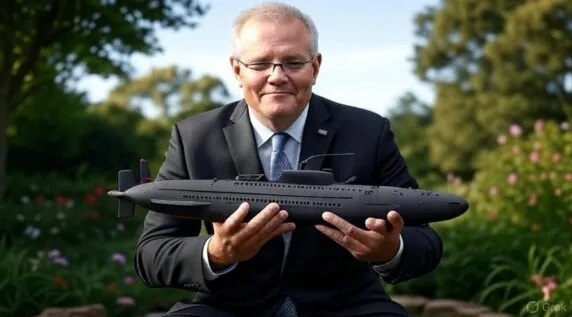
An Australian comment on the The Evacuation of US Bombers from RAF Fairford.

New England Cocky says:
, https://theaimn.net/flying-scared-the-evacuation-of-us-bombers-from-raf-fairford/
It is time for Australia to unravel the too deep embedding of Australian sovereignty into American imperialist dreams of natural resources theft and political intrigue.
The correct future for Australia is as an independent, non-aligned middle power, trading with Asia where we belong and ceasing to dream that Europe is the centre of the Universe. it is NOT, and neither is the USA (Undemocratic Sewer of Apartheid).
The US Supreme Commander is unfit for purpose, a bone spurs refugee from conscription now more important than any returned US military person who has served their country with distinction rather than cowardice.
It is time to cancel Scummo’s USUKA dirty deal for self-serving post-politics career working for a foreign power, because neither the USA nor the UK have the ability to meet the original contract conditions.
Hence, Australia is paying for US security plus an allegedly non-refundable tribute payment of about $2 BILLION for now already redundant boats, in an age when drone technology is cheaper and equally effective at killing people.
Flying Scared: The Evacuation of US Bombers from RAF Fairford

From the aggressively pro-American terrain of the Australian Strategic Policy Institute, Malcom Davis claimed to have identified the crucial lesson: “that in an age of drone warfare, it is no longer sufficient to assume that aircraft parked in the open are invulnerable to attack.”
7 October 2026Dr Binoy Kampmark, https://theaimn.net/flying-scared-the-evacuation-of-us-bombers-from-raf-fairford/
The evacuation of a dozen B-1B bombers of the US Air Force from the RAF Fairford in Gloucestershire is another instalment in the latest rippling of the Iran war that began as a pre-emptive, illegal assault by the US and Israel on the Islamic Republic in late February. This, arguably, came in two parts, the first scripted with the detention and arrest of five men on September 27 in the vicinity of the base on suspicion of committing offences under the Explosives Act and suspicion of preparation of a terrorist act. (Another was arrested on October 1.) All were British nationals based in London and speedily released on police bail. At the time, Assistant Commissioner Laurence Taylor, head of Counter Terrorism Policing (CTP), floated the suggestion that “this may be activity committed by proxies, or individuals either knowingly or unknowingly, working on behalf of a foreign state.” The dust had barely settled before the finger pointing at Iran began. The men in question, according to the police, remained under investigation, with their release “subject to stringent conditions on their movement and contact with others.”
On October 4, the Pentagon announced that “all bombers that were deployed to RAF Fairford have been re-deployed to their home stations in the United States.” The department, wishing to blunt the significance of this hasty decision, added that the US military bomber force of B-1s, B-2s, and B-52s remained “ready to deliver precious global strike capabilities – including through operations that launch and recover from the continental United States.”
Two days later, Counter Terrorism Policing announced that a further arrest had been made of a dual UK-Iranian man regarding “activity that took place close to RAF Fairford.” The arrest was made “on suspicion of terrorist acts under Section 5 of the Terrorism Act 2006.” The Senior National Coordinator for CTP, Vicki Evans, reiterated the line that this remained “a live investigation and our specialist teams continue to pursue multiple lines of enquiry into the circumstances surrounding events near RAF Fairford.”
When asked about whether the movement of the bombers was linked to the September 27 incident, US Secretary of State Marco Rubio proved platitudinous and undetailed. “It’s not unusual to see movement of assets to different parts of the world based on exercises, redeployments, people changing out and new people coming in, new planes coming in and old planes going out.” This front of airy meaninglessness did not take long to vanish. The US Vice President JD Vance added salt to the otherwise dull mix in stating that the bombers had exited the base out of an “abundance of caution.” It was felt that Iran was doing what it had “done for 49 years… which is to engage in acts of terrorism against the US and against a lot of other people.”
President Donald Trump, tongue ever loosened, also told reporters when asked if the bomber redeployment had arisen from any “specific threat” did not hesitate: “Yeah, I think we can say that. They didn’t fly out by accident.” What followed was the usual combination of adulterated facts and twisted tales. There had been “some threats. And rather than tempting the enemy, we’ll capture the enemy and beat the enemy. But why should we leave them there? So we moved them around a little bit. Not very far.” Never one to accept the premise that the US security establishment might err on occasion, the president reiterated the familiar, if long fossilized line: Washington “actually knows the people that made the threat.”
This dramatic decision to move the bombers from a base that hosts the US Air Force’s 501st Combat Support Wing, an important component in the illegal war against Iran, is very much the opposite of what was initially done when a farmer noted the presence of three white vans and a “large group of hooded and masked men” who then attempted to alert the Ministry of Defence police at the airbase. When no response was forthcoming, she made a 999 call to police at 01:36 BST. Within 10 minutes “the village was full of armed police.” She ruminated on the effect of the call: “I believe that my 999 call foiled whatever plans they had.” She was also “absolutely staggered that it was left to me, as a member of the public, to see and report this.” The UK Defence Secretary, Wes Streeting, despite thanking the farmer for her call, suggested she only had “a partial picture” of what was unfolding, while Trump, claimed that the men were placed under surveillance “for a long time, and we got them.”
The swift relocation of such costly, vulnerable military hardware in the face of a threat that would, if inflicted, have cost a fraction of any budget, is also a startling reminder of the turns in modern warfare. The Ukrainians demonstrated with formidable efficacy in Operation Spider’s Web how its drones could strike Russian nuclear-capable bombers, allegedly crippling a third of its capacity. Taking place in June last year, it involved the use of 117 modestly priced drones that had been smuggled into Russia via lorries by unwitting drivers. The strikes, taking place across five different time zones with the assistance of the commercial autopilot software ArduPilot and the use of artificial intelligence for targeting purposes, led to an estimated bill amounting to US$7 billion. Some 41 planes were damaged or destroyed.
Operation Spider’s Web drew swooning praise from the cognoscenti. Katja Bego of Chatham House thought it “offered a glimpse into the future of warfare, transformed by access to cheap, widely available technology such as small drones, in which anything, anywhere can become a target.” This, she went on to say, raised “urgent questions” about NATO’s own preparations in the face of such an attack.
Before mighty odds and expensive machinery, new methods of war are proving resourceful, daring and devastating. One palpable absurdity of the Iran War has been the eye-popping costs accruing from the use of heavy weaponry in offence and anti-ballistic missiles such as the THAAD system in defence. This has drained the US inventory, sending Washington’s allies into fits of concern. On a relatively meagre budget, labouring in the face of superior odds and numbers, Tehran has caused mayhem with its drone and missile strikes across the Gulf region. In the case of RAF Fairford, the Iranians, whatever the speculation, did not even need to launch a single drone for an expensive fleet of bombers to be relocated to the continental US.
Despite no official confirmation that Tehran was actually involved, the commentary circuit has been clogged by assessments of a victory for the Islamic Republic. “I think it is hard to conclude anything other than that this will be seen as a success by Iran,” suggests former UK first national security advisor, Lord Peter Ricketts. “Whether it was the intention or whether it’s the inadvertent outcome, it is certainly the outcome that they have now forced the US into a public bring-back of their forces from one of their allies.”
From the aggressively pro-American terrain of the Australian Strategic Policy Institute, Malcom Davis claimed to have identified the crucial lesson: “that in an age of drone warfare, it is no longer sufficient to assume that aircraft parked in the open are invulnerable to attack.” The US needed “to invest in hardening bases, including developing new hardened aircraft shelters for forward deployed aircraft.” Another, surely cheaper solution would be to refrain from launching criminally foolish wars in the Middle East, or anywhere else, for that matter.
The war against Iran was meant to conclude in a popular insurrection against the theocrats in Tehran and the blooming of various flowers in the Orangerie of democracy. There was no insurrection and certainly no flowering. Instead, the successor regime to those slayed continues to resist with steeliness and wage its battle in the fields of briefings, psychology and economics. So far, it is winning.
The normalising of nuclear

6 October 2026 Noel Wauchope, https://theaimn.net/the-normalising-of-nuclear/
The facts on the nuclear industry’s effects on health and environment are now seen through a blur of discussion on climate change, and costs, and connection with military power, and it all seems too hard to grasp. When the UK’s Green Party decides to go sorta kinder pro-nuclear, well, nuclear power and nuclear weapons are beginning to look sort of OK and normal.
We are in a strange period of time, in which things previously agreed on, are now up for doubts and denial. Just as an example, in Australia, free infant vaccinations supplied by the government have pretty much been for many decades considered mandatory (although not legally mandatory). Now infant vaccination rates are falling. This fall reflects a loss of trust in health authorities. Most Australian children still do receive the full schedule of vaccines, but there’s a lessening of understanding of the reasons behind the programme. That’s combined with misinformation about vaccination as the cause of autism, among other false claims.
That’s just one very important example of the atmosphere of doubt and distrust that is becoming more prevalent in society at large, and Australia is not immune from this “fog of disbelief” about public health.
The vaccination issue is particularly misunderstood and dangerous, because that programme depends on “herd immunity.” A century ago, Australian families were all too likely to lose several of their many children to infectious diseases. In any old country cemetery in Victoria, you will find a whole lot of graves of infants, who died 100 years ago, many from the same families. Over the 20th Century a universal programme of infant vaccination revolutionised that, and survival rates for children rocketed up.
Well, I certainly have strayed away from my main theme – which is the growing acceptance of the nuclear industry as probably OK. I do think that social media, with its briefness and lack of fact-checking has contributed to the blurring of information, and the growing distrust of genuine experts.
What is happening in the UK, under a Labour government, is a definite case of the blurring of information about the nuclear industry. This started in 2006, with Tony Blair reversing Labour’s opposition to new nuclear, and it steadily moved on to Keir Starmer’s enthusiasm for it in 2025. Now the UK Labour government has a seemingly more moderate and “leftish” Prime Minister, with a more nuanced approach to things nuclear. Their latest effort is acting on the report of the Nuclear Regulatory Taskforce Review, which recommends a “radical reset” of the UK’s nuclear regulatory framework to streamline approvals, reduce costs, and support safe, rapid delivery of civil and defence nuclear projects. So, the The UK’s Environment Agency is moving towards treating nuclear energy more like other industries by implementing a Nuclear Transformation Programme. It is an almost imperceptible change.
But it is such a telling change. No other industry has this extraordinary feature – that it involves the highly toxic fuels of uranium and plutonium, that its very essence is in splitting the atom to release ionising radiation As there has not been a nuclear disaster since 2011, it seems to be accepted by the powers that be that there will never be another one. At the same time, today’s warfare of drones and missiles raises a scary idea that a weapon might strike a nuclear facility. No other industry has this unique vulnerability that a great spread of toxic radiation would result from such a hit.
The dangerous effects of ionising radiation have been recognised since 1896, and confirmed more recently in several scientific studies, such as cancer mortality after low dose exposure to ionising radiation in workers in France, the United Kingdom, and the United States (INWORKS): cohort study. And we all think it’s fine, we don’t think twice, as the radiographer darts out of the room when we have an X-ray.
So the nuclear industry is not like other industries. It has always had exceptional regulations to deal with this unique danger. Now the USA under Trump is denying the danger, and trashing the safety regulations. You might expect a British Labour government to have a more principled approach to health and safety. But, under the pressures of propaganda, of industry lobbying, of determination to stay in power, this process of normalisation of nuclear is underway in the UK.
Who can we turn to, to speak truth to power? Not the UK Greens. They have just voted to end the party’s opposition to nuclear power, dropping a commitment to phase out the technology in a major shift in its energy policy. Matthew Pearce, The Guardian, has explained this – “The Green MP Carla Denyer said the decision recognised there was a role for nuclear while the country moved towards an electricity system based primarily on renewables.” The article quotes Professor Andrew Stirling, who commented that “the motion was “completely irrational”. “Why would a party that pioneered concerns about nuclear power that have been so broadly vindicated by history, choose now to shift its position?”
One does wonder how long it will be, before something happens. We have been extraordinarily lucky in that the big accidents have been relatively few, and not in recent years. Unfortunately, while people are shocked and concerned about big dramatic accidents, the slow insidious spread of “low level” ionising radiation just goes on, unnoticed. It’s “normal”.
I for one am quite saddened at the UK Greens’ decision. You wonder who is left – anyone in politics, in power, in the media, who is not so hell-bent to hang on to their job, that they might stick their head above the parapet and say NO to nuclear.
AUKUS Inquiry exposes the great submarine deception
My own submission, ‘AUKUS is a boondoggle’, grappled with the problem of the afterlife of defence ministers. “Boondoggle” is an American word used to describe a government program that is expensive and wasteful yet continues to be funded because it is paid from the public purse, which fits AUKUS perfectly.
By John Jiggens | 5 October 2026, https://independentaustralia.net/politics/politics-display/aukus-inquiry-exposes-the-great-submarine-deception,21620
AUKUS critics warn the $500 billion submarine deal is sacrificing Australian sovereignty and social priorities to deeper integration with the U.S. war machine, writes Dr John Jiggens.
This article is the second part of a two-part story. Read part one HERE.
Members of the Queensland “peace not war” community, including myself, attended the Brisbane session of the AUKUS Public Inquiry on 25 August. Many academics, unionists and activists from other peace groups attended, too.
At the Brisbane session, only two of the five Commissioners were physically present: Peter Garrett and retired Admiral Chris Barrie, a former head of the Australian Defence Force. Two other Commissioners beamed in via the internet: Dr Carmen Lawrence, the first woman to become Premier of an Australian state and Karina Lester, a Yankunytjatjara woman whose people’s country had been poisoned by the UK Government in nuclear tests in the 1950s.
As lead Commissioner, Peter Garrett judicially ran the Public Inquiry, introducing the evidence-givers and reading the questions of the online Commissioners. His rockstar charisma enveloped him in a kind of awe, while his career as a powerful voice for change gave him enormous presence and credibility.
Sharing the bench with him was Chris Barrie. They seemed an odd couple: the peacenik and the former chief of Defence, but AUKUS had united them.
The Queenslanders who presented to the Public Inquiry at the Brisbane hearing included Marianne Hanson, an academic representing the International Campaign against Nuclear Weapons (ICAN); Margaret Pestorius from Wage Peace; Adrian Skerritt, a unionist, ALP member and housing activist; and Professor Warwick Powell from QUT, among others.
Pestorius argued that AUKUS wasn’t a Defence program: it was an economic program that aimed to enmesh Australia in the U.S. military-industrial complex to enable the flow of money to corporate warmongers who had an appalling record of destruction, genocide and ecocide.
Pestorius said former Defence Minister Christopher Pyne, now a military exports consultant and arms dealer, reshaped Australia’s involvement in the weapons industry. This pathway was prefigured by other defence ministers who joined the board of major weapon manufacturers, such as Kim Beazley, who joined Lockheed Martin, and Brendan Nelson, who became CEO of Boeing Australia.
At the end of Margaret Pestorius’s evidence, Admiral Barrie asked her about several Australians employed by U.S. think tanks to profit from AUKUS:
I wonder if you know about American Global Strategies.
It’s an organisation based in Washington, DC, and I wondered if you knew that Scott Morrison is the vice president of American Global Strategies, and he’s assisted by a former ambassador and Liberal Senator, Arthur Sinodinos, and a former head of the Office of National Intelligence, Nick Warner.
The Brisbane session
My own submission, ‘AUKUS is a boondoggle’, grappled with the problem of the afterlife of defence ministers. “Boondoggle” is an American word used to describe a government program that is expensive and wasteful yet continues to be funded because it is paid from the public purse, which fits AUKUS perfectly.
The Americans have another word, which explains why boondoggles go ahead, even though they are such incredibly expensive and wasteful uses of public money. That word is “grifter”.
In politics, the word “grifter” refers to people who use the political process to enrich themselves from the public purse and profit from the extraordinary waste of public money created by boondoggles, such as AUKUS.
Prime Minister turned grifter
When Morrison became Prime Minister in 2018, the Future Submarine Project was running well behind time, and American voices were whispering about ditching the French deal and accepting the worst deal ever.
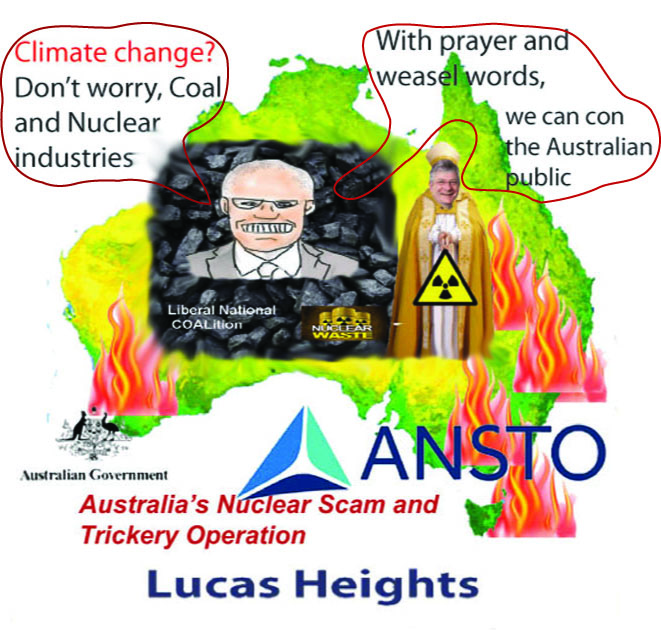
In his 2022 book, Morrison’s Mission, journalist Paul Kelly reveals that Mike Pompeo, the U.S. Secretary of State, was the U.S. voice who collaborated with Morrison in planning AUKUS. Evangelical Christians, the two men spoke every week about Jesus while plotting AUKUS. As they drew closer, Morrison, a geostrategic lightweight, became Pompeo’s pupil, who was co-opted by Pompeo into the U.S. strategic architecture.
In his role as Chair of the Strategic Advisory Board at the Hudson Institute, Mike Pompeo invited Morrison to join the Strategic Advisory Board at the Hudson Institute in November 2022.
The major originator of the AUKUS strategy was Mike Pompeo, who hijacked Australia’s Future Submarine Project and rebuilt it as AUKUS. His strategy was to lock Australia into a global war allied with the U.S. and UK against China, not an Australian-based strategy to deter invasion.
Adrian Pisarski, a veteran housing advocate and former CEO of National Shelter, championed purchasing the cheaper conventional submarines instead of AUKUS nuclear submarines, and using the hundreds of billions saved for addressing Australia’s major housing crisis and other social policies.
Pisarski said:
We could do free dental and Medicare for that sort of money quite easily.
We could have cheaper university education. Commonwealth rent assistance is something else that we could also lift very easily and start to assist people.
I caught the train down from the Sunshine Coast this morning and on the way, I observed no fewer than six homeless camps along parklands etc. We’ve just had a council to the north of Brisbane set up a permanent camp for homeless people. We haven’t seen these conditions in Australia since the 1940s. We are in a genuine housing crisis.
The sort of money that we are talking about for AUKUS would solve our housing crisis.
Admiral Chris Barrie followed this up. He had spoken to colleagues who suggested that for $78 billion Australia could get 12 conventional submarines, not the eight nuclear submarines for circa $500 billion from AUKUS.
Carmen Lawrence asked Mr Skerritt:
“As a fellow ALP member, why do you think the Labor Government has embraced AUKUS rather than prioritising social needs that you have identified?”
Mr Skerritt replied:
I don’t know. I find it particularly unfathomable that when there was a change of government, and this being signed up to by a previous government, that there was no proper inquiry or government-led initiative to question whether this was in Australia’s best interests in the long term.
In my view, it’s not in our best interest and I would have really appreciated the Australian Government performing a proper inquiry that looked at those questions.
Another witness was Professor Warwick Powell, who argued that Australian foreign policy has long been trapped between two deep psychological anxieties: a fear of our own Asian geography and a persistent fear of being abandoned by a distant transatlantic protector.
For over a century, these twin fears have led us to seek security from Asia, rather than security in Asia.
Powell said:
AUKUS tells us that Australia is small, vulnerable, frightened and incapable of surviving in its own region without huddling beneath an overseas nuclear umbrella…
We do not need to choose between being a vassal state or shutting ourselves off from the world and building a fortress. We need the courage to be a sovereign middle power.
The Morrison-Pompeo AUKUS deal changed the Future Submarine Project from providing for the defence of Australia to providing a base for U.S. and UK nuclear submarines in Australia for forward attack operations by the U.S. military against China.
The claim that AUKUS is about the defence of Australia is a lie disguised by Orwellian misuse of language. The Government’s pretence is that U.S. and UK nuclear submarines won’t be based in Australia. Instead, they say that the U.S. and UK nuclear submarines will be “rotated” through Australia.
To assist this “rotation”, the Australian Government is building accommodation for 2,000 US. military personnel at the Stirling Naval Base in Western Australia. This base is only 20 kilometres south of Fremantle and it will be a nuclear target if the coming war with China eventuates.
The extraordinary cost of the project, its clear strategic misdirection from a defence of Australia policy to participating as a vassal in a U.S. war on our main trading partner, China, and the high probability we will never see these submarines were just a few of the many faults of this far-fetched and highly implausible deal discussed at the Brisbane Hearing of the Public Inquiry into AUKUS.
AUKUS public inquiry asks what Parliament won’t
Scott Morrison devised AUKUS in 2021 in partnership with Mike Pompeo. While Morrison was an incompetent neophyte in terms of naval geostrategy, the more experienced Pompeo hijacked Australia’s Future Submarine Project, turning it from a strategy to defend Australia into a strategy for locking Australia into war with China.
Despite the astronomical debt AUKUS will saddle Australia with, deep public unease over nuclear submarines and the economic absurdity of using Australia as a base against its major trading partner, China, there has never been a parliamentary inquiry into AUKUS.
By John Jiggens | 29 September 2026, https://independentaustralia.net/politics/politics-display/aukus-public-inquiry-asks-what-parliament-wont,21597
With AUKUS costs soaring and scrutiny lacking, a public inquiry is asking the questions Parliament has failed to confront, writes Dr John Jiggens.
AUKUS IS A HIGHLY controversial and wildly expensive nuclear submarine arms deal between Australia, the UK and the USA, created largely in secret by former Prime Minister Scott Morrison in 2021, working with the man who would become his mentor in grift, U.S. Secretary of State Mike Pompeo.
The epic failure in defence policy that led to AUKUS flows from the mismanagement by successive coalition governments of the Future Submarine Project. Realising that our Collins-class submarines would become outdated by 2024, the Labor Government initiated the Future Submarine Project in 2012 to purchase replacement submarines that would begin arriving by 2024.
France, Japan and Germany were invited to tender for eight conventional submarines for $20 billion with delivery to start by 2024.
After Labor lost government in 2013, the Coalition governed Australia for the next nine years under three different Prime Ministers: Tony Abbott, Malcolm Turnbull and Scott Morrison. Every time the Coalition changed leaders, the leader changed the contract for which country would build the submarines.
The Abbott Government had planned to purchase 12 conventional submarines from Japan for $30 billion, but Abbott was ousted by Morrison and Turnbull in 2015, resulting in Malcolm Turnbull becoming PM.
Malcolm Turnbull rejected the Japanese deal, preferring the French tender and he changed the submarine deal. Turnbull was ousted by Scott Morrison in 2018 and Morrison, in turn, broke the contract Turnbull had signed with the French and sought a different builder for the submarines.
The deal Morrison signed off on in 2021 was for eight nuclear submarines from the U.S. at the mind-boggling cost of $368 billion. By then, eight years had been lost and under Morrison’s new AUKUS deal, the timeline for delivery of Australia’s submarines became sometime in the 2040s — two decades behind schedule.
The mainstream media never mention this disastrous mismanagement by Coalition governments of the Future Submarine Project and the cost blow-out from $20 billion to an astonishing $368 billion.
Rex Patrick, a submariner and former Senator, protested that this breathtakingly expensive AUKUS deal would bankrupt the Australian Defence Force. Former Prime Minister Paul Keating called AUKUS “the worst deal in all history”. They were just two of the numerous critics of this disastrous deal.
The worst deal ever
Besides wasting eight years changing contracts for building the submarines and putting the delivery date back two decades, as well as the extraordinary blowout in cost, there were many other outrageous provisions of the AUKUS agreement that justified Keating’s assessment of it as the worst deal ever.
Under Scott Morrison’s AUKUS deal, Australia will be responsible for disposing of the highly enriched uranium waste of all the partners of the AUKUS nuclear submarine fleets, the U.S., the UK nuclear submarines, as well as any nuclear submarines Australia obtains.
At the Brisbane session of the Public Inquiry into AUKUS, Commissioner Admiral Chris Barrie, a former head of the Australian Defence Force, disputed the claim that AUKUS would cost only $368 billion. Besides cost overruns, delays and material changes, which will add to that figure, there was one huge cost of the AUKUS agreement: the cost of disposing of nuclear waste that was never costed.
Admiral Barrie commented:
“But the other additional element which raises the question of whether costs can be contained and how that might affect the taxpayer in the long run is the requirement that Australia under the AUKUS pact is responsible for the disposal of highly enriched uranium waste.”
Admiral Barrie quoted an estimate of the expense of disposing of and securing the nuclear waste, which was derived from a South Australian royal commission that had costed a proposal that South Australia should become a repository for radioactive waste.
The South Australian Nuclear Fuel Cycle Royal Commission estimated construction, operation and decommissioning of a high-level nuclear waste repository at $145 billion over 120 years. The true cost of AUKUS will be over $500 billion.
A site for this radioactive waste facility has not been chosen, although possible locations on Defence land, including the Woomera Prohibited Area, have raised concerns among First Nations communities that traditional lands could again be targeted. No permission was sought from any First Nation’s people before Morrison signed off on this.
The coming war with China
Another reason why the AUKUS agreement is the worst deal ever is the replacement of conventional submarines with nuclear submarines. As Admiral Chris Barrie observed, nuclear submarines are designated as attack submarines.
The advantage of nuclear submarines over conventional submarines is that they are faster and can stay underwater longer. They are attack submarines and their naval purpose is to chase and attack enemy submarines. However, they are much bigger than conventional submarines, so they are more easily detected in the shallow waters of Australia’s continental shelf.
Conventional submarines are better suited for a policy of defending Australia, while nuclear submarines are designed to attack enemy submarines.
Scott Morrison devised AUKUS in 2021 in partnership with Mike Pompeo. While Morrison was an incompetent neophyte in terms of naval geostrategy, the more experienced Pompeo hijacked Australia’s Future Submarine Project, turning it from a strategy to defend Australia into a strategy for locking Australia into war with China.
The geostrategy embedded in AUKUS was an American strategy, designed to control the Indian and Pacific oceans and blockade China.
When the Pompeo-Morrison duo redesigned the Future Submarine Project in 2021, the USA had temporarily run out of wars, and U.S. geostrategy was turning into what was referred to by the U.S., their L-NP proxies and their media mates as “the coming war with China”.
China had emerged as a formidable economic and industrial power and was becoming a potential peer competitor with the U.S. Under the Wolfowitz Doctrine, the U.S. would not tolerate the rise of any power that can dispute its global dominance. The U.S. military was preparing for this coming war and was building up its nuclear submarine fleet for this purpose. This coming war with China was masked under the slogan of the Pivot to Asia.
AUKUS was announced shortly before the 2022 Australian Election, an election in which Morrison and his Defence Minister Peter Dutton ran on the China threat and “the coming war with China”. Repeatedly, Peter Dutton compared China to Nazi Germany, and declared China was backing Labor to win the election. Afraid of being wedged on foreign policy, the Albanese-led ALP pursued a “small target” strategy and went along with AUKUS.
However, in the following years, the U.S. military-industrial complex finds itself blessed with a surfeit of wars, led by a delusional and self-proclaimed “stable genius”, President Donald Trump: supporting Israel and its wars in Gaza, Lebanon, Syria and Iran, designed to build a Greater Israel; and supporting Ukraine in a proxy war against Russia in which the U.S. supplied the weapons, and Ukraine supplied the occupants of the body bags.
Ironically, this proxy war was designed to knock Russia out of the ranks of the great powers. Instead, these wars have weakened the U.S. severely.
Too many wars. And the Iran war has widened, creating a new war between Saudi Arabia and Yemen. The coming war with China, previously pencilled in for 2027, has been temporarily placed on hold.
The AUKUS Public Inquiry
Despite the astronomical debt AUKUS will saddle Australia with, deep public unease over nuclear submarines and the economic absurdity of using Australia as a base against its major trading partner, China, there has never been a parliamentary inquiry into AUKUS.
Our Parliament’s abject abdication of its responsibility for this ginormous boondoggle horrified a coalition of former MPs, retired military and naval officers, strategists, academics, union leaders and politicians. They noted the grifter-like silence of our political leaders and the failure of the mainstream media to question this looming disaster. They decided to organise an independent AUKUS Public Inquiry, under the auspices of the Australian Peace and Security Forum (APSF).
If the media and the Government refused to do their job, they would. They asked Australia two simple questions:
Will AUKUS keep us safe?
At what cost?
The Inquiry secretariat was headed by retired Major General Michael Smith and retired Labor politician Doug Cameron. They appointed five commissioners, led by Peter Garrett, former Midnight Oil vocalist and ALP Minister, as their lead commissioner and frontman. They invited Australians for submissions on AUKUS and received over 700 submissions.
Over the past three months, the five commissioners toured Australia, visiting all the state capitals, hearing from selected submission makers, including former Prime Ministers Malcolm Turnbull and Kevin Rudd, former Defence Ministers Bob Carr and Linda Reynolds, former Foreign Minister Gareth Evans and over 100 other concerned Australians.
Brisbane was the penultimate stop of the Public Inquiry on their tour of mainland states, before their concluding session in the Commonwealth capital, Canberra, after which they will write a report that they plan to release in November.
This is part one of a two-part story. Part two will be published soon.
Hegseth calls US-built nuclear submarines the ‘apex predator’ of the seas. But are they right for Australia?


Ben Doherty.4 Oct 26, https://www.theguardian.com/australia-news/2026/oct/04/hegseth-apex-predator-nuclear-submarines-right-for-australia-aukus-ntwnfb
Some experts argue Virginia-class submarines government is buying second hand are good for fighting American wars, but not for defending Australia
On stage for his “arsenal of freedom tour”, the US secretary of defense – who prefers the appellation “secretary of war” – was ebullient.
“This Virginia-class submarine is a paragon of American engineering and fighting spirit,” Pete Hegseth roared, standing at Newport News shipyards where those boats are being built.
“It is the apex predator of the undersea domain, the most advanced and lethal submarine ever built.”
There are few who would argue with the Virginia’s lethality. Australia is set to buy three of these boats, secondhand, from the US navy, beginning in 2032.
But is it the right submarine for Australia?
Hegesth’s words, for all of their rhetorical bellicosity, were revealing: “American … fighting spirit”; “apex predator”; “ensuring America is free and safe and powerful”.
Virginia-class submarines – nuclear-powered and conventionally armed – are very good at travelling undetected fast and staying underwater for a very long time (limited, essentially, only by the capacity of the crew to stay submerged).
They are an attack submarine, an outstanding offensive platform for hunting and destroying a far-distant adversary, able to traverse thousands of miles of deep ocean undetected.
But Australia’s National Defence Strategy, released this year, says the nation’s “strategy of denial” – which aims to deter conflict before it begins – was “focused on safeguarding Australia’s interests in our primary area of military interest”. This includes the immediate region encompassing the north-east Indian Ocean through maritime south-east Asia into the Pacific as well as Australia, its populated offshore territories and its northern approaches.
A growing chorus of naval experts is arguing that the Virginia-class submarines are the wrong boats for this country.
The waters to the north of the Australian continent – from where any potential threat is overwhelmingly likely to approach – are shallow, best suited to a submarine far smaller than Virginia’s nearly 8,000 tonnes of displacement, some say.
A smaller, more nimble submarine, quieter when operating under battery, is a better platform for that role, they say. In addition, smaller submarines are cheaper and easier to crew: Australia could afford more of them, increasing the potency of its force.
The argument runs thus: the Virginias, and the even larger Aukus-class submarines set to follow, are nuclear-powered submarines perfectly suited to fighting a distant war on behalf of the US. But they are the wrong boats to defend Australia.
Defence or ‘projecting power’?
Dr Andrew Gaczol spent a decade as an international political analyst and policy officer at the Australian Department of Defence. He told an independent inquiry into Aukus coordinated by the Australian Peace and Security Forum that the Australian public had been provided only two arguments in support of the Aukus deal, “and neither stand up to serious scrutiny”.
The primary argument put forward is that of defence of Australia.
Gaczol told the inquiry it was unnecessary to have submarines with unlimited range to defend the nation’s waters or conduct defensive operations in the region.
“The latest state-of-the-art Air Independent Propulsion (AIP) conventional diesel-electric submarines are more suitable as they are smaller, quieter when submerged and better suited to the relatively shallow waters of the Australian continental shelf and the waters to Australia’s north,” he said.
The second argument propounded for Aukus is the need for Australia – as a nation reliant on trade – to maintain open sea lanes around it.
Given the small number of attack submarines the Aukus deal will ultimately provide, critics argue they will not be able to protect Australia’s seaborne approaches.
Navies around the world operate on “the rule of threes”, which states that for every three of a complex platform you possess, only one can be relied upon to be operational at any given time. Essentially, of three submarines, one is on active deployment, one is training or conducting exercises, and one is in maintenance, dry dock or recovering from operations.
Australia plans to buy three Virginia-class submarines from the US, to be supplemented – when they are designed and built – by up to five submarines of the Aukus class. By the end of the 2040s, eight submarines would give Australia, at any time, a fleet of two, perhaps three submarines on active deployment.
“I can’t see how such a small number of vessels will be able to keep open all of Australia’s trade routes all of the time,” Gaczol told the inquiry.
“As a counterpoint, I note that the US navy has over 60 nuclear submarines and are currently unable to force open the strait of Hormuz.”
Gaczol says he supports Australia having submarines, but that the Virginia and Aukus-class boats were not ideal for Australia’s defence. The benefit of Australia’s geography – a vast landmass protected by thousands of kilometres of ocean – mean “the chances of Australia being actually sort of invaded are virtually nil”.
The oceans to Australia’s north are also relatively shallow – under 200 metres deep across parts of the Indonesian archipelago and South China Sea – meaning large nuclear submarines “are more easily detected” than smaller and quieter conventional boats.
As deep-water boats that can travel anywhere around the globe at high speed, nuclear submarines are unnecessary for defending Australia, Gaczol says, and are instead about “projecting power into another part of the world”.
“To put it colloquially, that’s not protecting our patch. That’s going into someone else’s patch and poking them in the eye,” he says.
Gaczol believes the acquisition of Virginia-class submarines suits US imperatives, not Australia’s.
“The only scenario I can really see these boats being applicable for is to chase Chinese submarines in the South China Sea should it come to a conflict there. Effectively, our force will be an adjunct of the US Navy.”
‘Best deal on offer’
Former South Australian senator Rex Patrick, an ex-submariner and resolute Aukus critic, is familiar with the aphorism “quantity is a quality of its own”.
He says while there was undoubted advantage to buying large attack submarines – greater payloads, more torpedoes, more capability to transport special forces soldiers – “there’s always a trade-off”.
“If the cost of buying one large nuclear submarine is that you could buy four other submarines for the same price, that’s a trade-off you have to consider.”
Aukus is forecast to cost up to $368bn by the 2050s – $33m a day for 30 years on a conservative estimate. Few, if any, major defence projects of this complexity run on time, or on budget.
And Aukus is dependent not only on Australia’s efforts to build a nuclear-powered submarine fleet from scratch: it is reliant on the US – beset by tenaciously laggard boat-building – to construct enough Virginia-class boats to spare three for Australia; and it needs the UK’s sole submarine-building yard to design and build the first of the new Aukus-class boats on which Australia’s domestically built boat will be constructed.
For far less than the slated cost of the Aukus deal, Australia could buy 20 conventionally powered air independent propulsion submarines, Patrick says.
“If you had 20 submarines, you’d have seven boats in the water, in seven different locations, and seven times the magnitude of problem for the other commander,” he says.
Patrick notes Canada, with the longest coastline in the world and facing many of the same geopolitical challenges as Australia, recently announced it would buy 12 air independent propulsion submarines from German shipbuilder TKMS for a reported $33bn.
The Australian government, though, insists Aukus is “the best deal on offer”.
In June, the defence minister, Richard Marles, told the Shangri-La dialogue Australia had made the deliberate choice to increase the weight of its naval spending: more than 40% of Australia’s defence budget is now directed towards the country’s maritime domain.
“For a three-ocean nation, this is a strategic necessity,” Marles said. “Ninety-eight percent of Australia’s traded goods passes through Australian ports. Ninety percent of our fuel is imported. Our economic sovereignty, in the most basic sense, is a maritime proposition.”
And Marles argued an increasingly militarised region demanded a collective response.
“The free and open passage of goods, energy and data across the seas is not just Australia’s economic lifeblood – it is the economic lifeblood of this entire region.”
In a Lowy essay, former special envoy for defence Luke Gosling wrote that nuclear submarines will give the Australian defence force “a regionally superior capability that will help it to deter war and, if it must fight a war, to win”.
“Threatening to aggressors, lethal if provoked, but not overtly provocative, nuclear submarines are the ‘goldilocks’ long-distance capability.”
Amid a rising drumbeat of concern over Aukus, Labor senator Raff Ciccone rose in the Senate in June to argue Australia’s strategic environment had changed dramatically and the country “must respond to the world as it is”.
“Nuclear-powered submarines are the only platforms that can provide Australia with the ability to deter threats to our maritime supply chains, on which our way of life depend,” he said.
“They alone have the speed, the endurance and the stealth necessary to effectively provide this deterrence. They are the bolt cutters that will ensure that we are never wrapped in chains.”
1 This month
17 October, Free Public Talk on Nuclear Issues in South Australia
David Noonan will speak on public interest concerns over the new Roxby Downs Indenture Act 2026 on BHP copper-uranium mining and ore processing in SA, and on how AUKUS may face SA with a High-Level nuclear waste agenda.
Dr Jim Green will discuss international developments in the field of nuclear power including ‘small modular reactors’ and Generation 4 ‘advanced’ nuclear reactor concepts.


Help Aunty Sue Protect Her Land and Sacred Sites From Destructive Rocket Testing.
.
Australians deserve the truth
about
AUKUS – https://aukuspublicinquiry.com/

PETITION – To: Prime Minister Anthony Albanese and the Australian Labor Government

of the week – Australians for War Powers Reform (AWPR)
To see nuclear-related stories in greater depth and intensity

